LED Lighting in Custom Cabinetry: A Premium Look Without Premium Costs
Modern furniture is no longer just about form, material, and hardware. Integrated LED lighting is becoming a full-fledged part of cabinetry design, helping to emphasize the architecture of the furniture, improve functionality, and create the impression of a more expensive, thoughtfully designed interior.
Properly designed LED lighting can completely change the perception of a kitchen, built-in cabinets, floating shelves, niches, bar areas, or furniture for residential and commercial interiors. At the same time, the cost of such a solution is relatively low compared to the visual effect it creates.
That is why LED lighting is becoming one of the most effective ways to give custom cabinetry a premium appearance without significantly increasing the project cost.
Where LED Lighting Can Be Used in Cabinetry
LED lighting can be integrated into almost any cabinetry construction. Depending on the location of the light, both the appearance of the furniture and its functional purpose can change.
Kitchen Cabinet Lighting
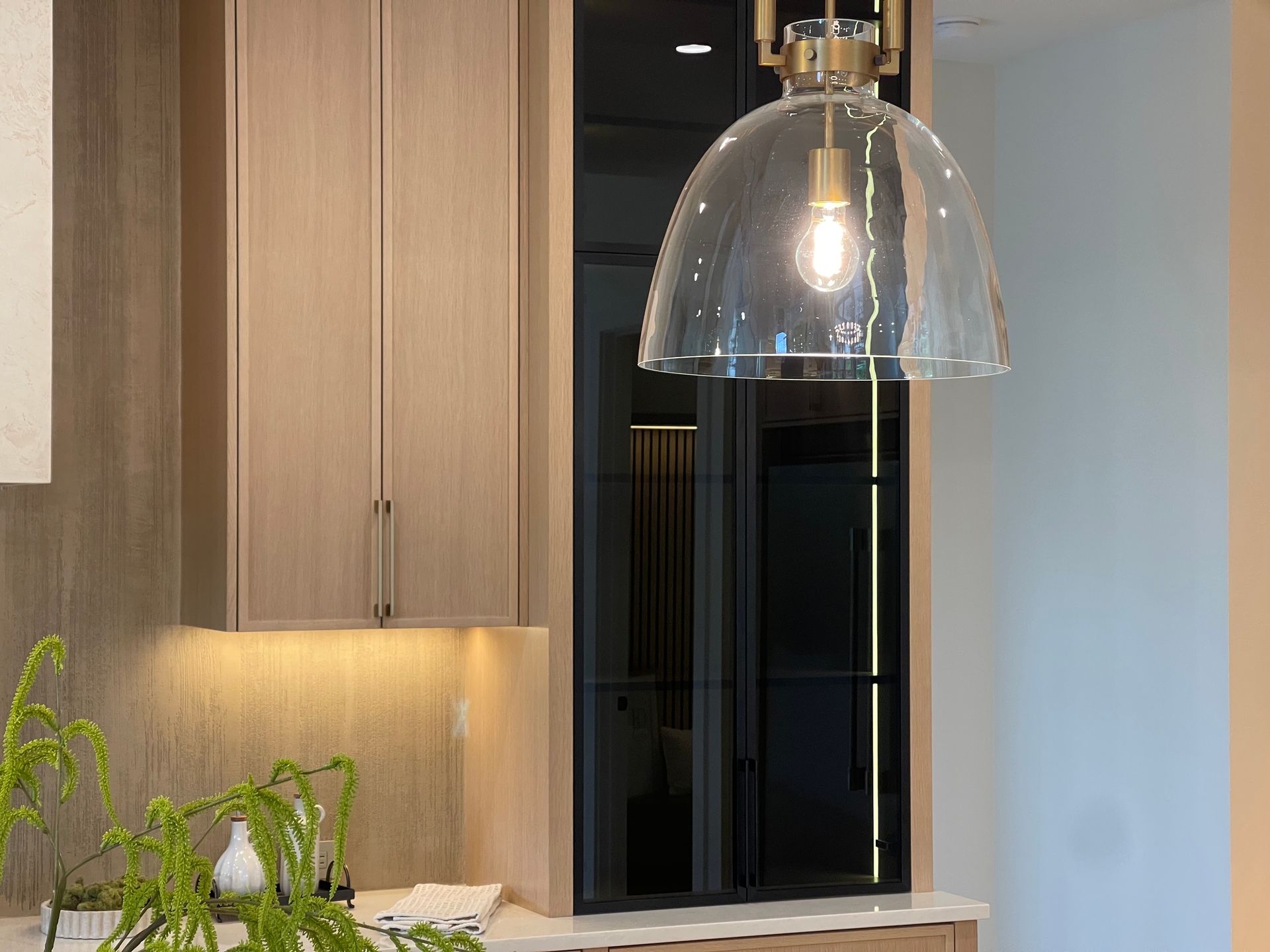
LED lighting is especially common in kitchens.
One of the most practical options is under-cabinet lighting, where the LED strip is installed underneath the upper cabinets and evenly illuminates the work surface.
This solution performs two functions at the same time:
- provides additional task lighting;
- visually highlights the countertop and backsplash.
In a well-made kitchen, the light source itself is almost invisible — the user sees only a clean, continuous line of light.
Lighting can also be used inside upper cabinets, especially when glass fronts or open decorative sections are installed.
Another effective option is lighting above cabinets or inside architectural niches, creating soft ambient lighting.
Toe-Kick Lighting
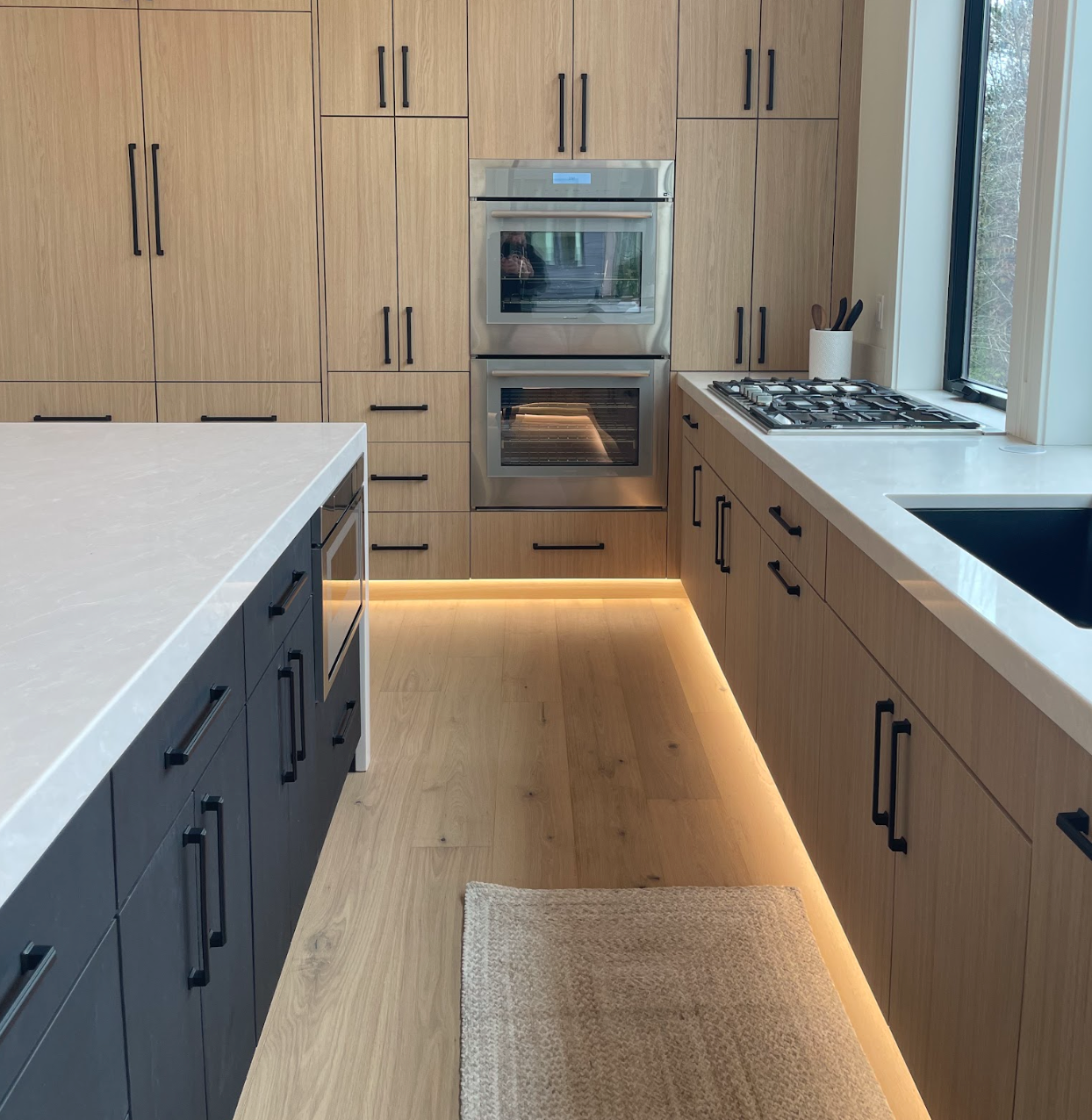
Toe-kick lighting is installed at the bottom of base cabinets, directly in the toe-kick area.
The light visually separates the cabinetry from the floor, making even substantial furniture appear lighter.
This technique looks especially impressive in:
- modern kitchens;
- kitchen islands;
- bathroom vanities;
- built-in cabinetry;
- reception desks;
- bar cabinetry.
In the evening, toe-kick lighting can also function as soft navigation lighting.
When used with a motion sensor, the light can turn on automatically when someone enters the room.
Floating Shelves
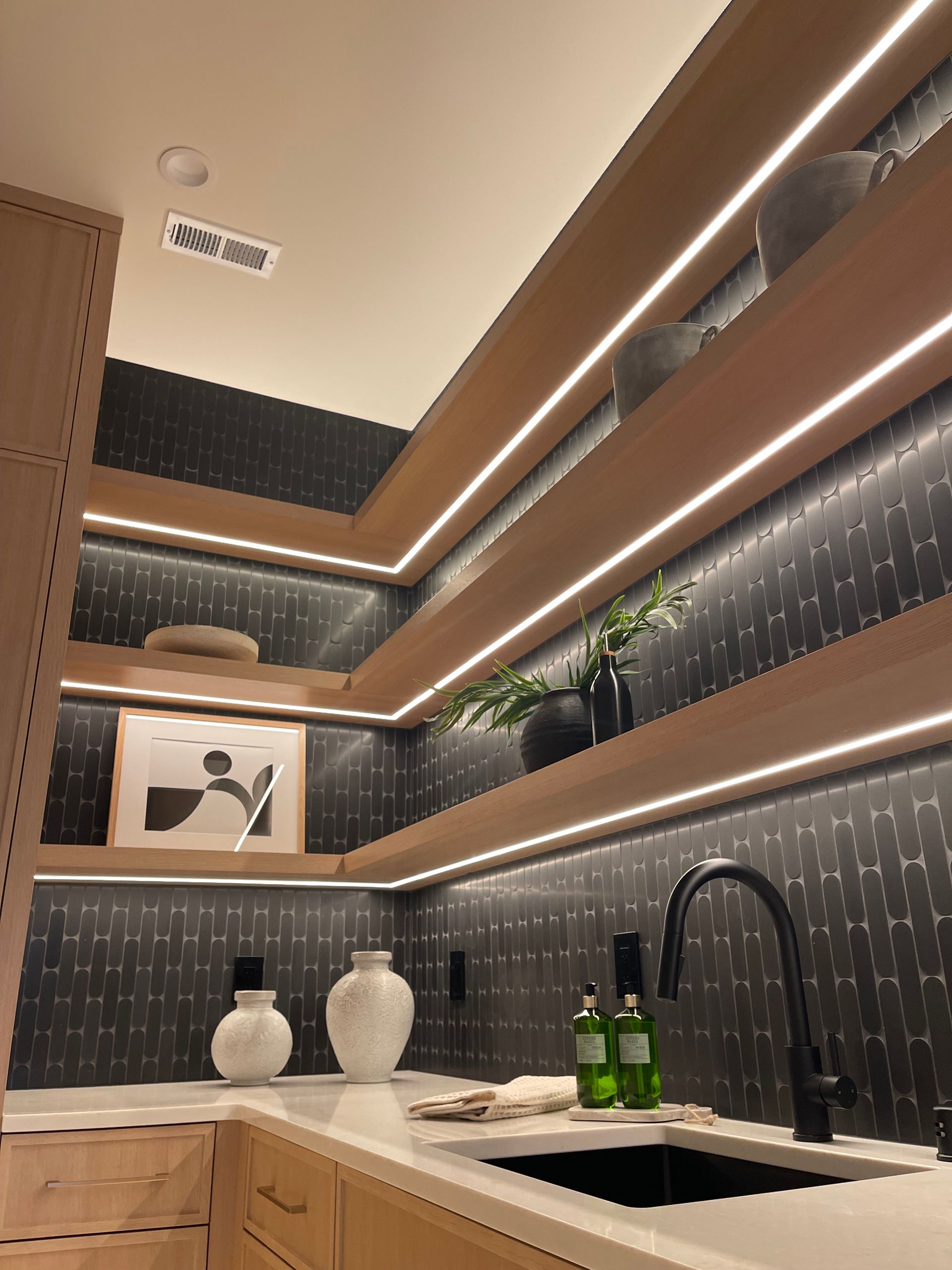
LED lighting and floating shelves work especially well together.
The LED strip can be installed:
- under the shelf;
- above the shelf;
- at the back;
- inside a specially prepared groove.
When the profile and light source are concealed inside the construction, only a thin line of light remains visible.
This technique can transform a relatively simple shelf into an expressive architectural element.
Lighting for floating shelves is widely used in kitchens, coffee stations, home bars, living rooms, offices, retail interiors, and hospitality projects.
Horizontal LED Lighting
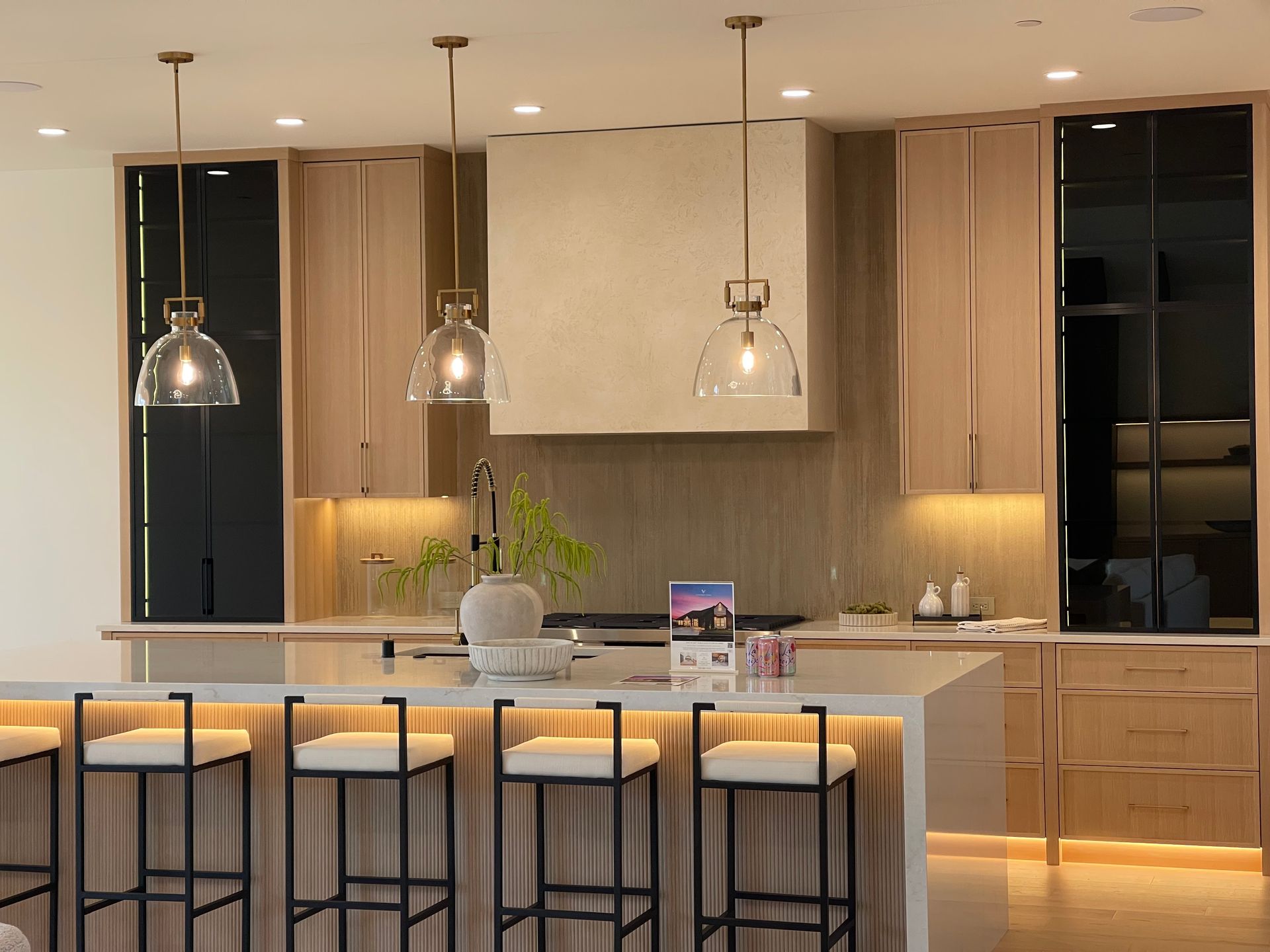
Horizontal LED lighting is one of the most common ways to integrate lighting into cabinetry.
Horizontal light lines can be positioned:
- under wall cabinets;
- under floating shelves;
- inside open niches;
- under countertops;
- in the toe-kick;
- inside cabinets;
- above cabinetry structures.
A continuous horizontal line visually increases the width of the furniture and creates cleaner, more modern geometry.
This technique works especially well with minimalist cabinetry and fronts without unnecessary decorative elements.
Vertical LED Lighting
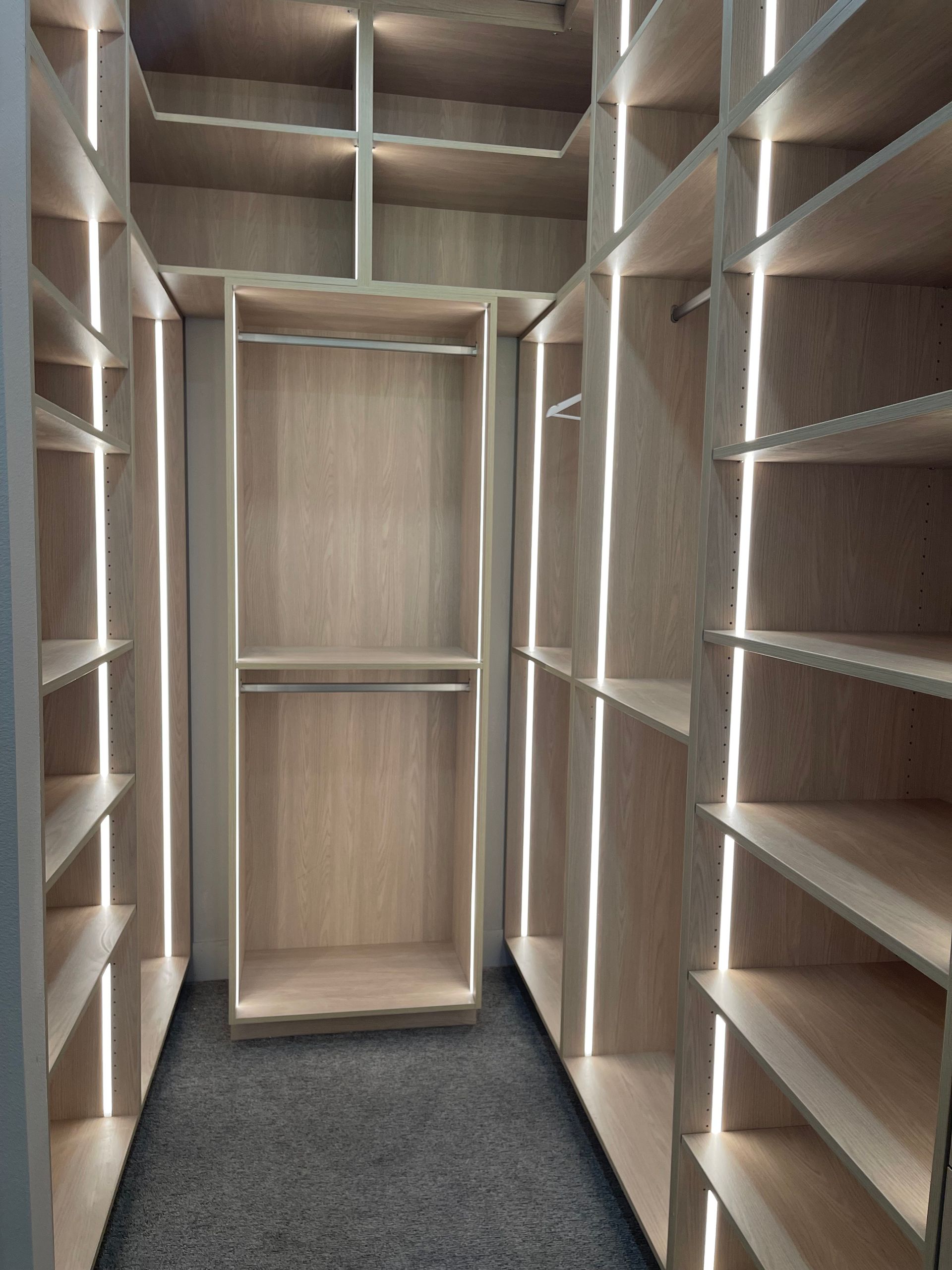
Another interesting design tool is vertical LED lighting.
Vertical light lines can be integrated into side panels, tall cabinets, display cabinets, shelving systems, and decorative niches.
This type of lighting visually increases the height of the construction and emphasizes its vertical proportions.
For example, two vertical LED lines inside a tall display cabinet can make even relatively simple furniture look like custom architectural millwork.
Vertical lighting is especially effective in:
- glass-front cabinets;
- open shelving;
- wine cabinets;
- bar cabinets;
- retail displays;
- built-in wall units.
COB LED - A Continuous Line of Light
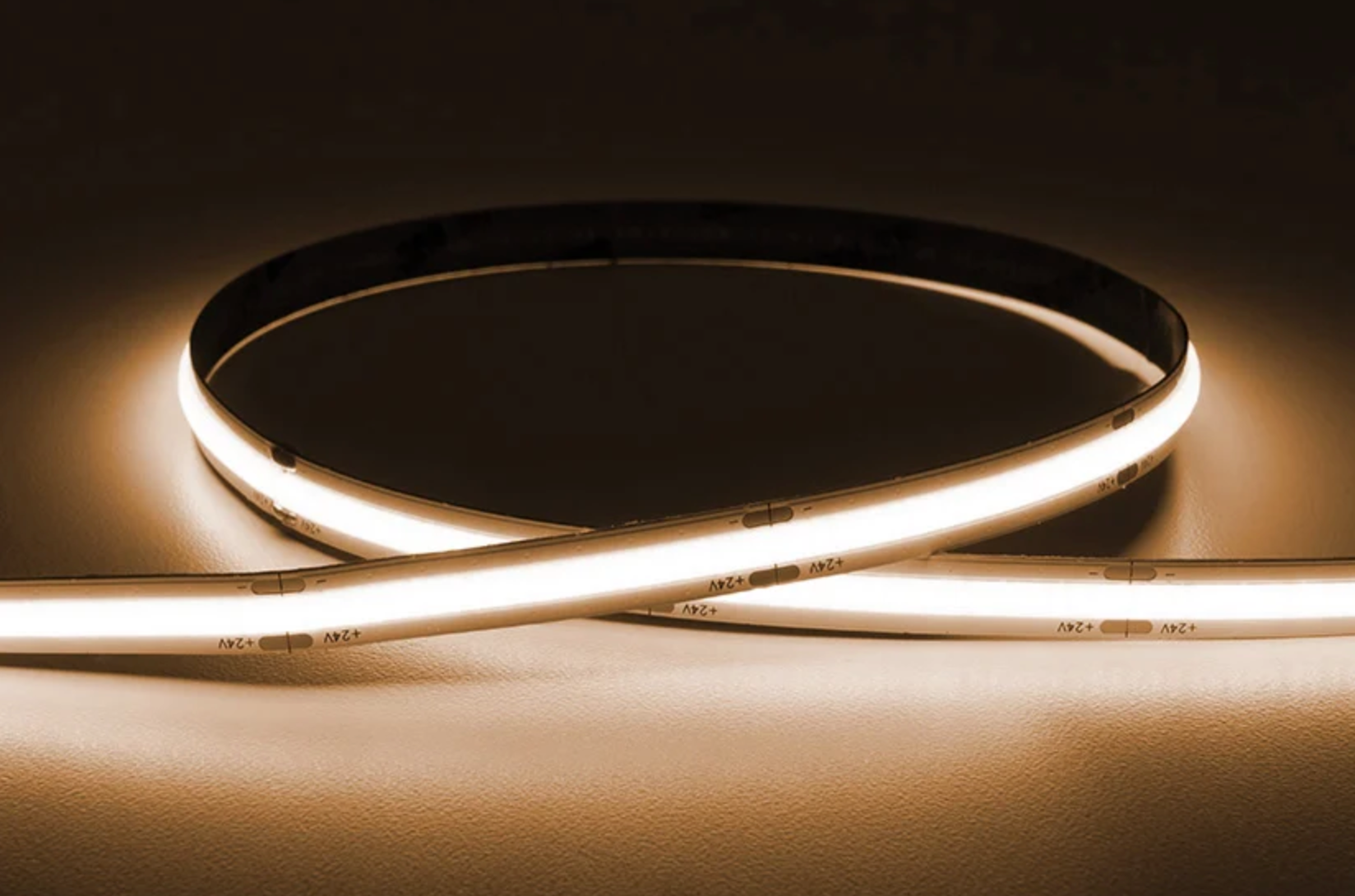
For modern cabinetry, one of the best solutions is COB LED strip lighting.
COB - Chip on Board - is a technology in which a large number of LEDs are positioned very close to one another.
The main visual advantage of COB LED is a smooth, continuous line of light without visible individual LED dots.
This is especially important in cabinetry.
When using a standard LED strip, individual diodes can sometimes remain visible even through a diffuser. COB lighting provides a much cleaner and more professional result.
- This is especially relevant for:
- floating shelves;
- open shelving;
- display cabinets;
- toe-kick lighting;
- kitchen under-cabinet lighting;
- decorative vertical light lines.
Aluminum LED Profile
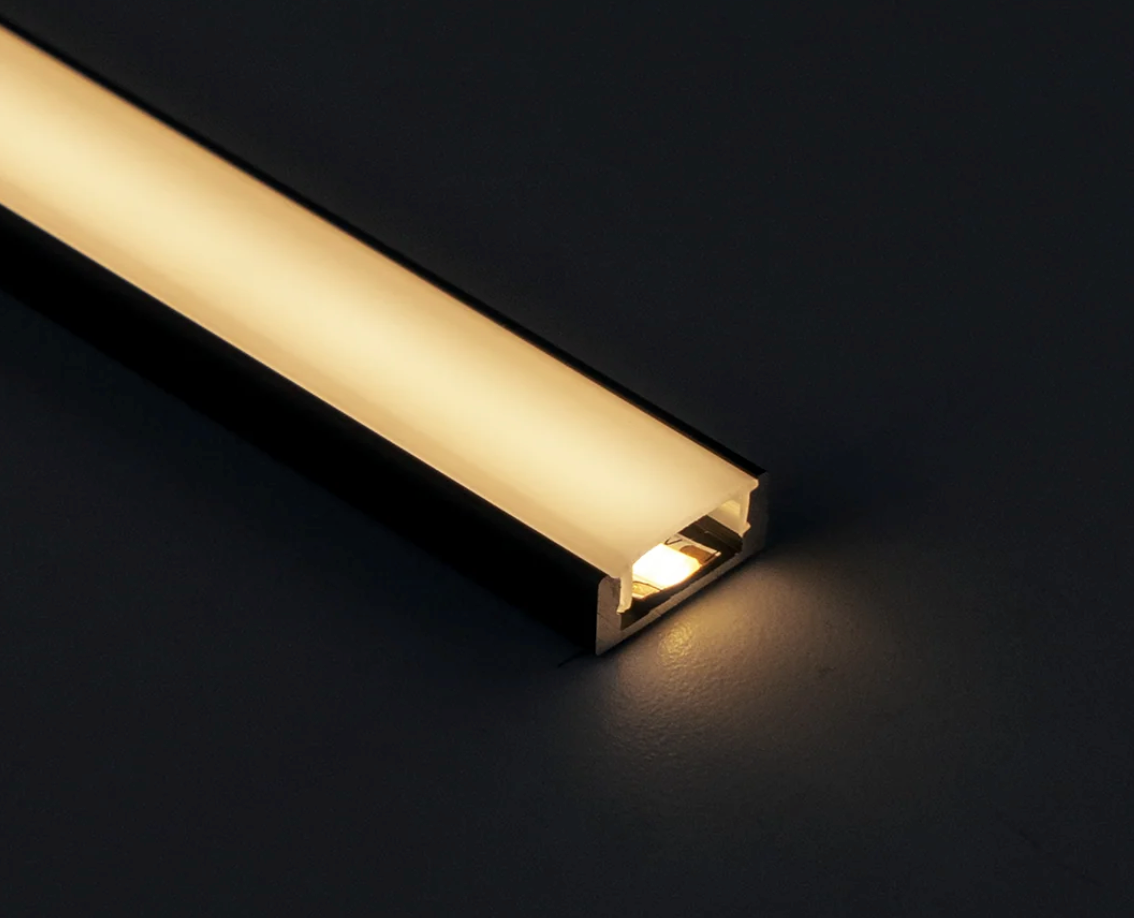
Professional cabinetry lighting is usually not installed simply by sticking an LED strip directly to the surface.
A special aluminum LED profile is used.
It performs several functions at once.
First, aluminum helps dissipate heat from the LED strip.
Second, the profile protects the LED strip from mechanical damage.
Third, a diffuser is installed in the profile, making the light softer and more uniform.
But perhaps the most important advantage for custom cabinetry is the ability to fully integrate the profile into the furniture.
Grooves and CNC Machining
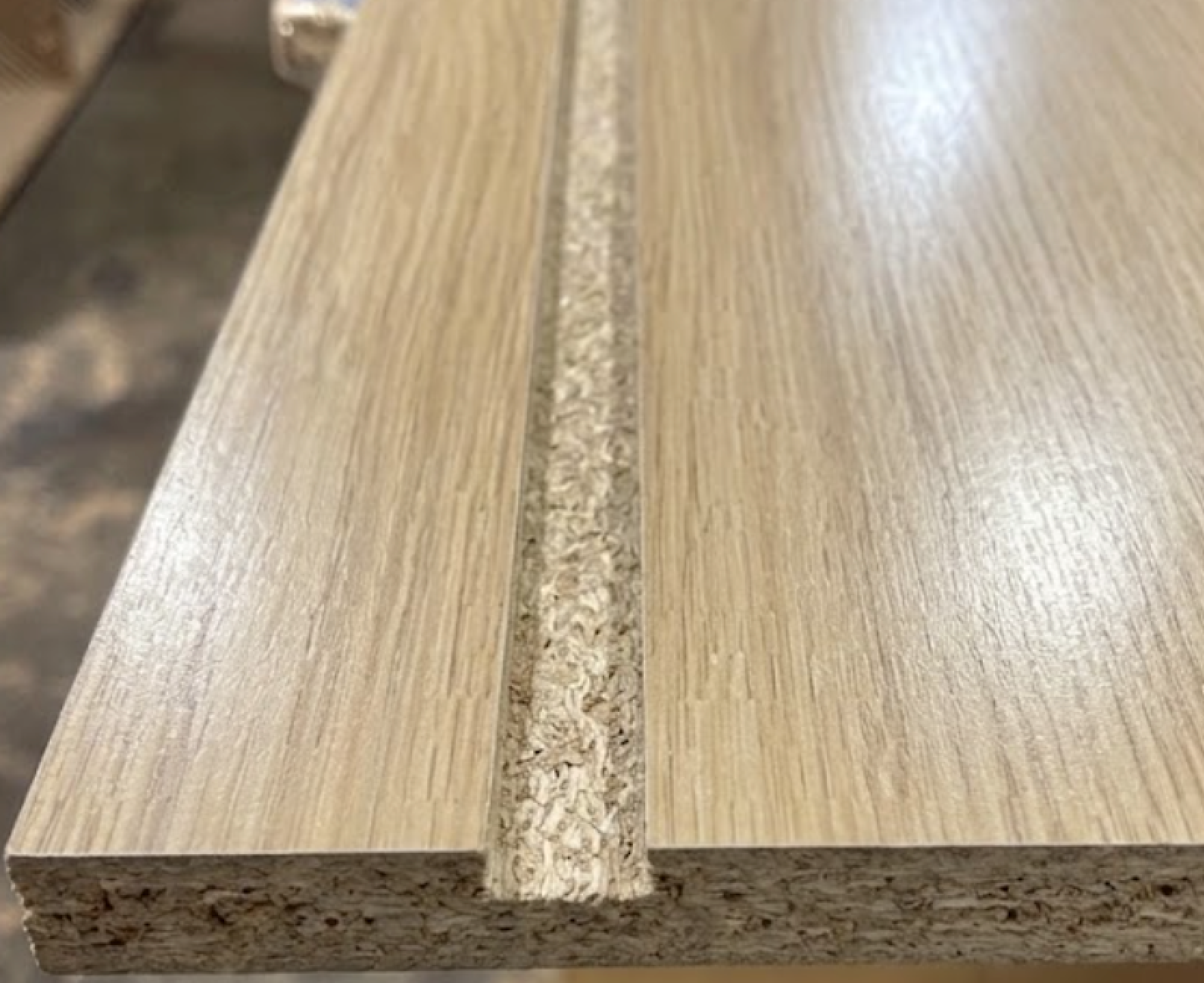
For a truly clean result, the LED profile should ideally be planned during the cabinetry design stage.
When cabinetry is manufactured using CNC equipment, a precise groove for the aluminum profile can be machined into a panel or shelf.
The depth and width of the groove are calculated for the specific type of profile.
After installation, the aluminum profile sits almost flush with the surface of the panel.
As a result, there are no:
- protruding elements;
- visible wires;
- LED strips attached directly to the furniture surface;
- random gaps.
The result is a clean, integrated construction that visually appears to be part of the furniture itself.
These small technical details often distinguish ordinary furniture from professionally designed custom cabinetry.
Power Supplies for LED Lighting
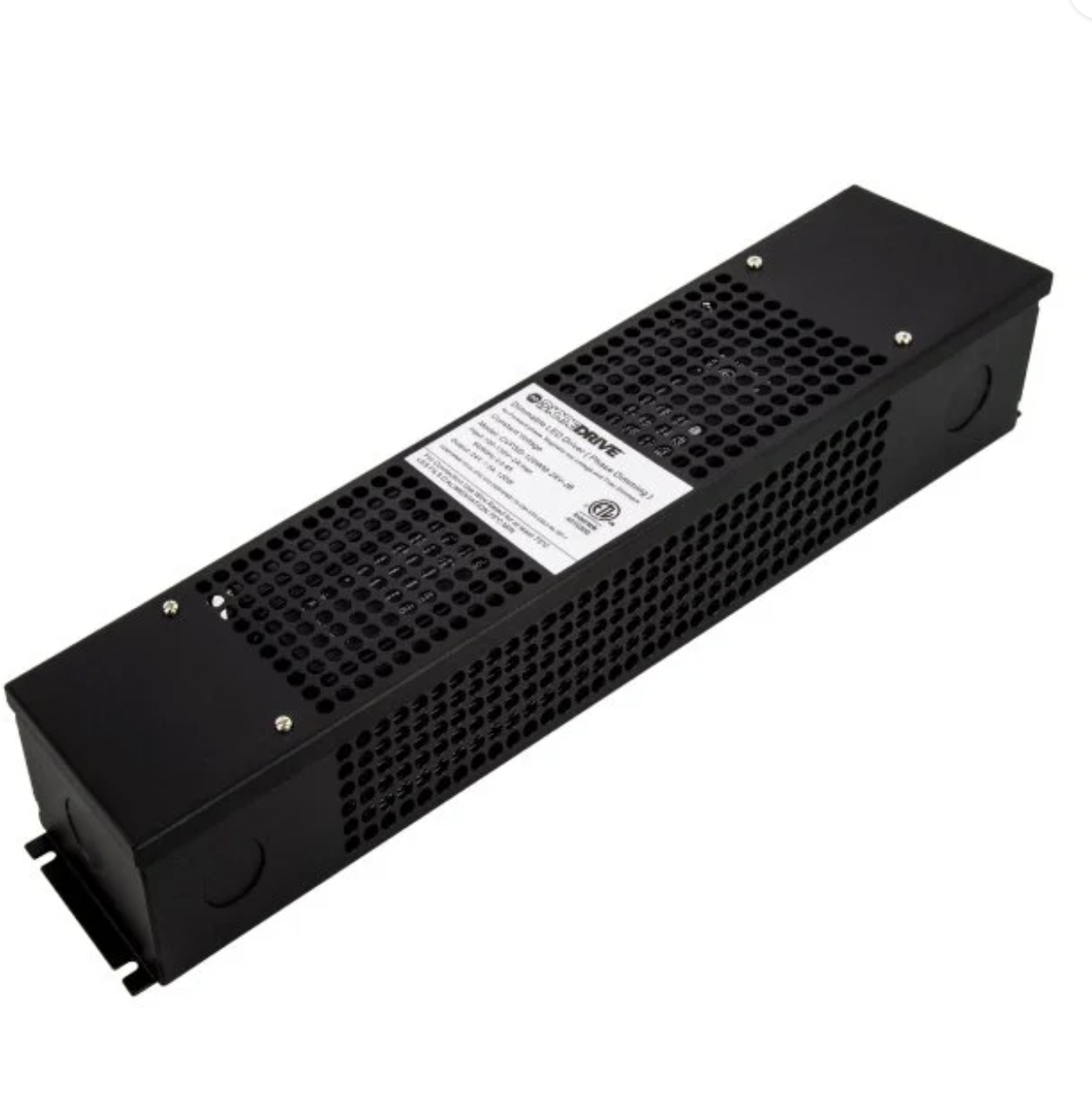
Any professional LED system requires a properly selected LED power supply — power supply or LED driver.
Its capacity must correspond to:
- the total length of the LED strip;
- the power consumption of the strip per foot or meter;
- the operating voltage of the system;
- the number of lighting elements connected at the same time.
The power supply should ideally be positioned so that it is hidden from the user while remaining accessible for service or replacement.
In custom cabinetry, dedicated technical spaces inside cabinets, removable panels, or other service areas can be provided for this purpose.
This is significantly better than placing the driver in a location that cannot be accessed after the furniture has been installed.
LED Lighting Control and Dimming
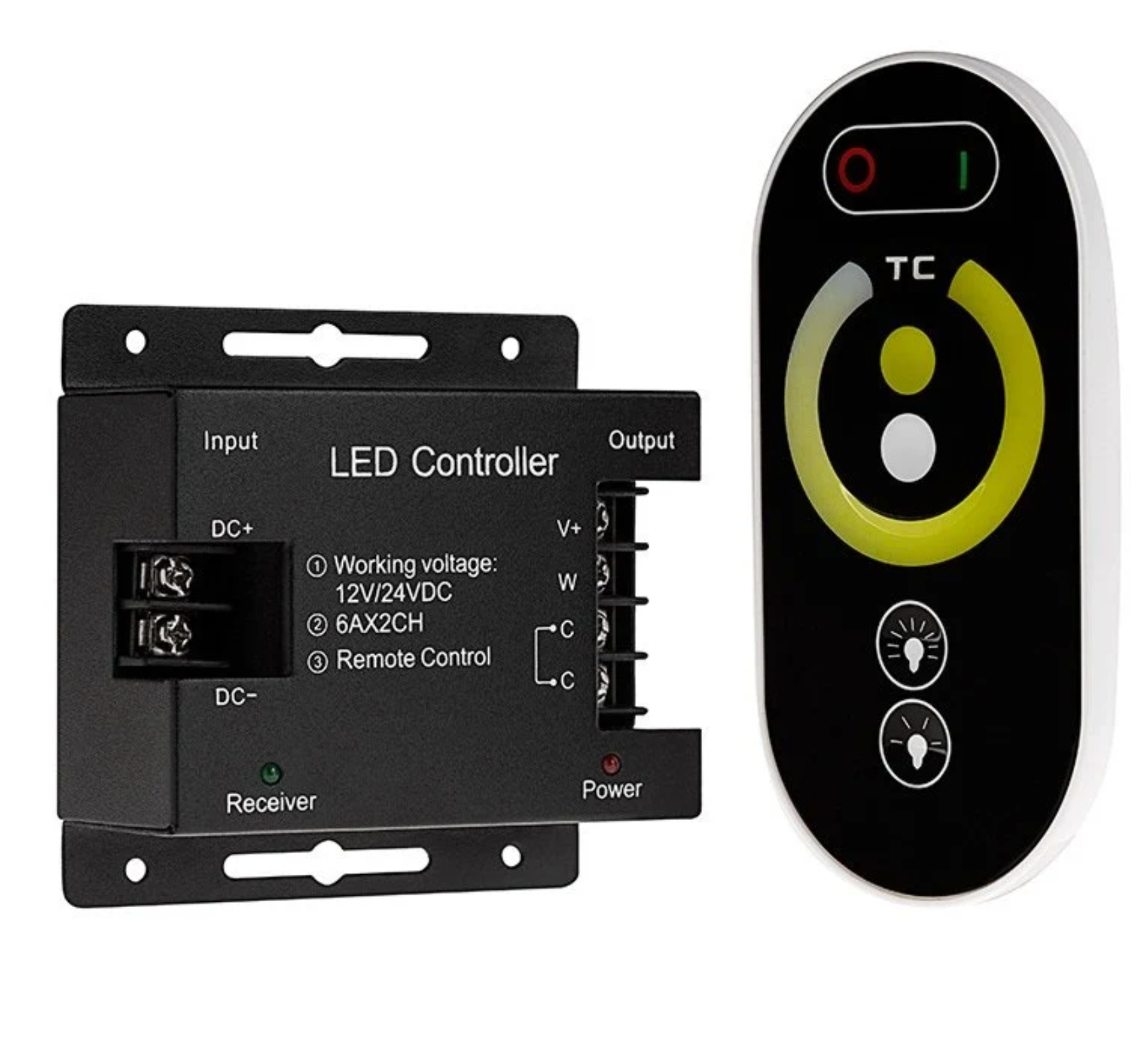
LED Lighting Control and Dimming
Another important feature of integrated LED lighting is dimming and lighting control.
Depending on the system, a dimmer or controller can be used to adjust brightness, color temperature, or other lighting functions.
At full brightness, the lighting can serve as functional task lighting. When dimmed, the same system creates softer decorative or ambient illumination.
LED lighting controls are especially useful in:
- kitchens;
- bar areas;
- living rooms;
- bedrooms;
- bathroom cabinetry;
- closets;
- hospitality interiors.
A properly selected dimmer or controller makes the lighting more flexible and allows the user to adjust the atmosphere and functionality of the space without changing the cabinetry itself.
Motion Sensors
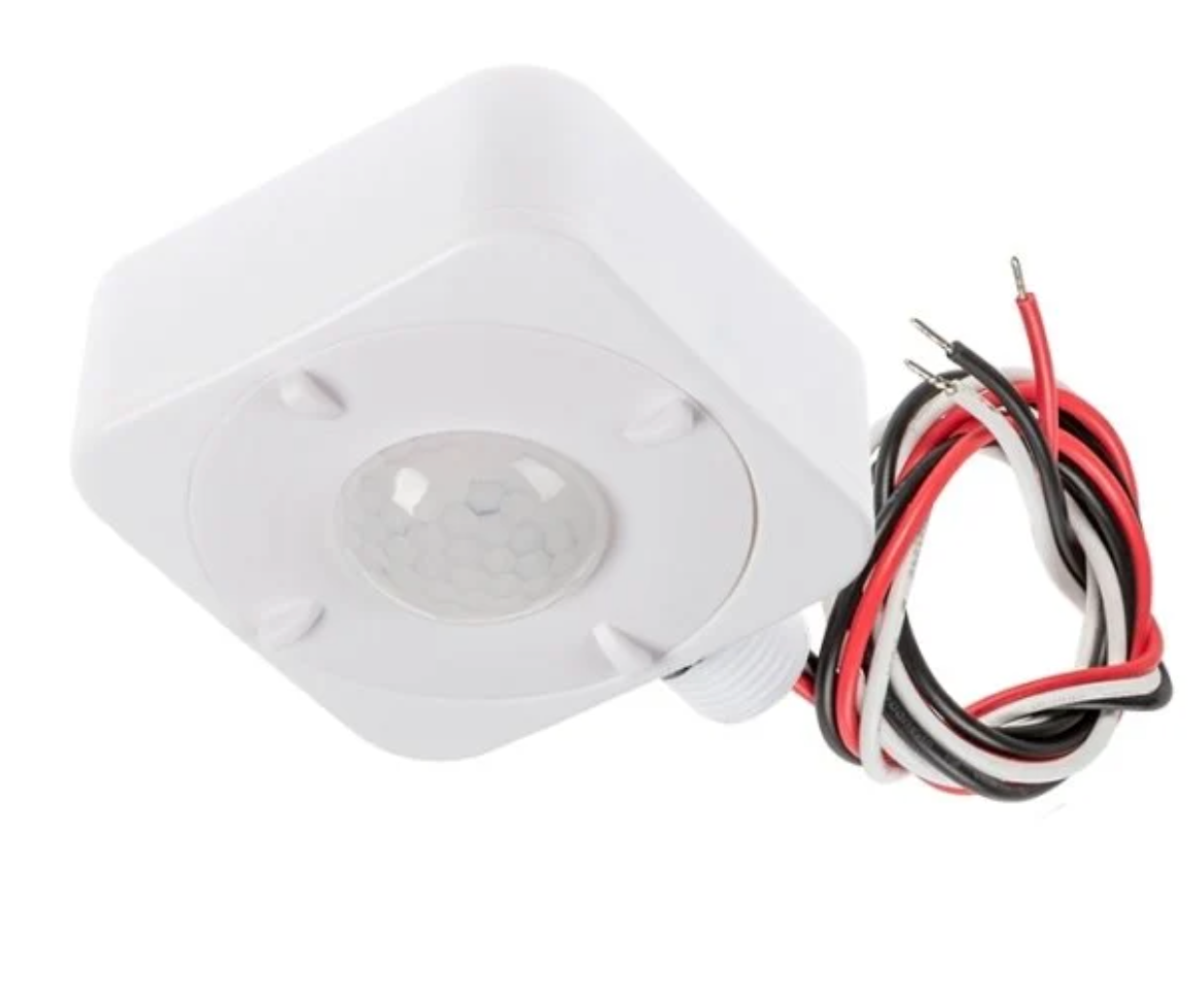
LED lighting can also be connected to a motion sensor.
This is especially convenient for:
- toe-kick lighting;
- walk-in closets;
- pantry cabinets;
- bathroom vanities;
- interior cabinet sections.
For example, at night, soft toe-kick lighting can automatically turn on when someone enters the kitchen.
In a closet or pantry, the light can turn on only when the door is opened or when someone approaches the cabinet.
This solution makes the furniture more functional and creates the impression of a modern, technologically advanced system.
Hidden Touch Dimmer
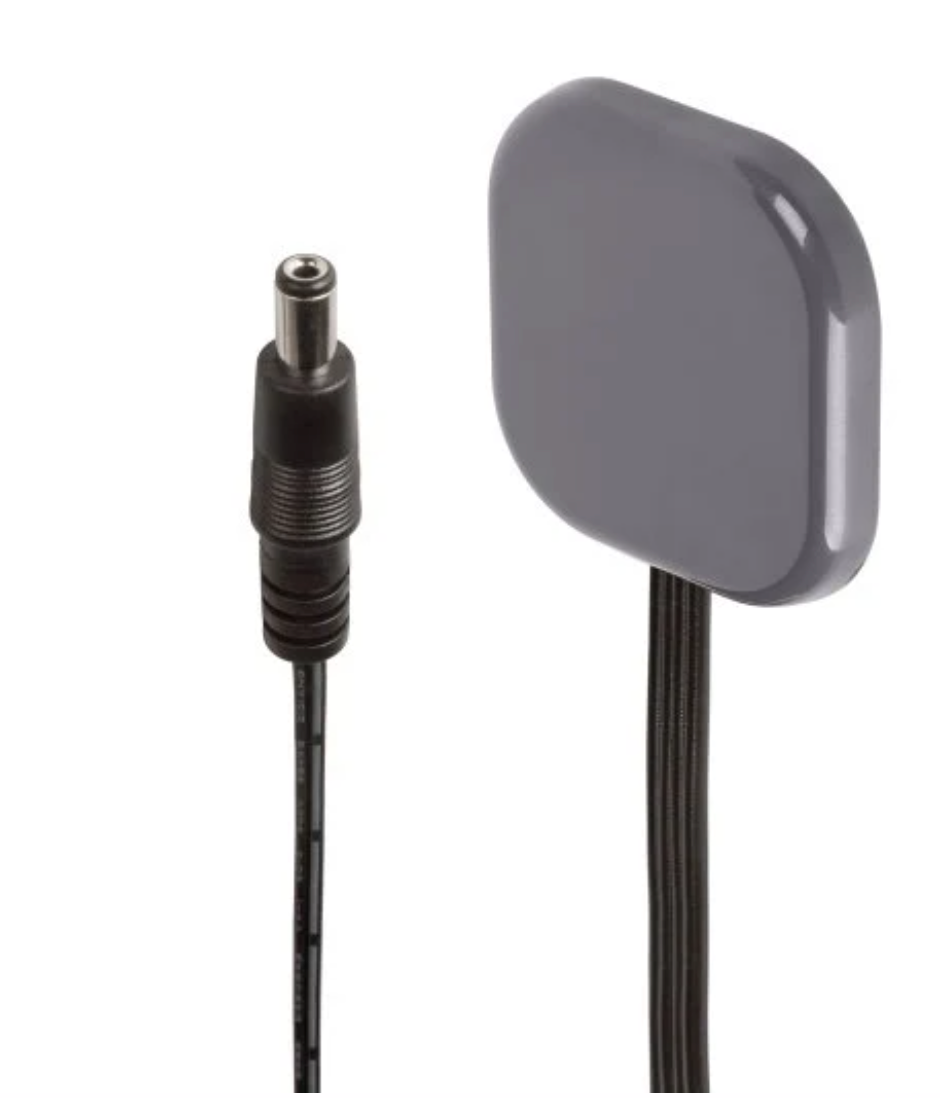
For LED lighting control, a Hidden Touch Dimmer can be used — a concealed touch switch installed behind wood, glass, marble, and other non-metallic materials less than 1" thick. A short touch turns the light on or off, while a long touch adjusts brightness from 10–100%.
This solution is especially convenient for custom cabinetry, floating shelves, and kitchen cabinets because no visible switch is required on the furniture surface. The unit works with 12V and 24V LED systems and supports PWM dimming.
Door Sensors
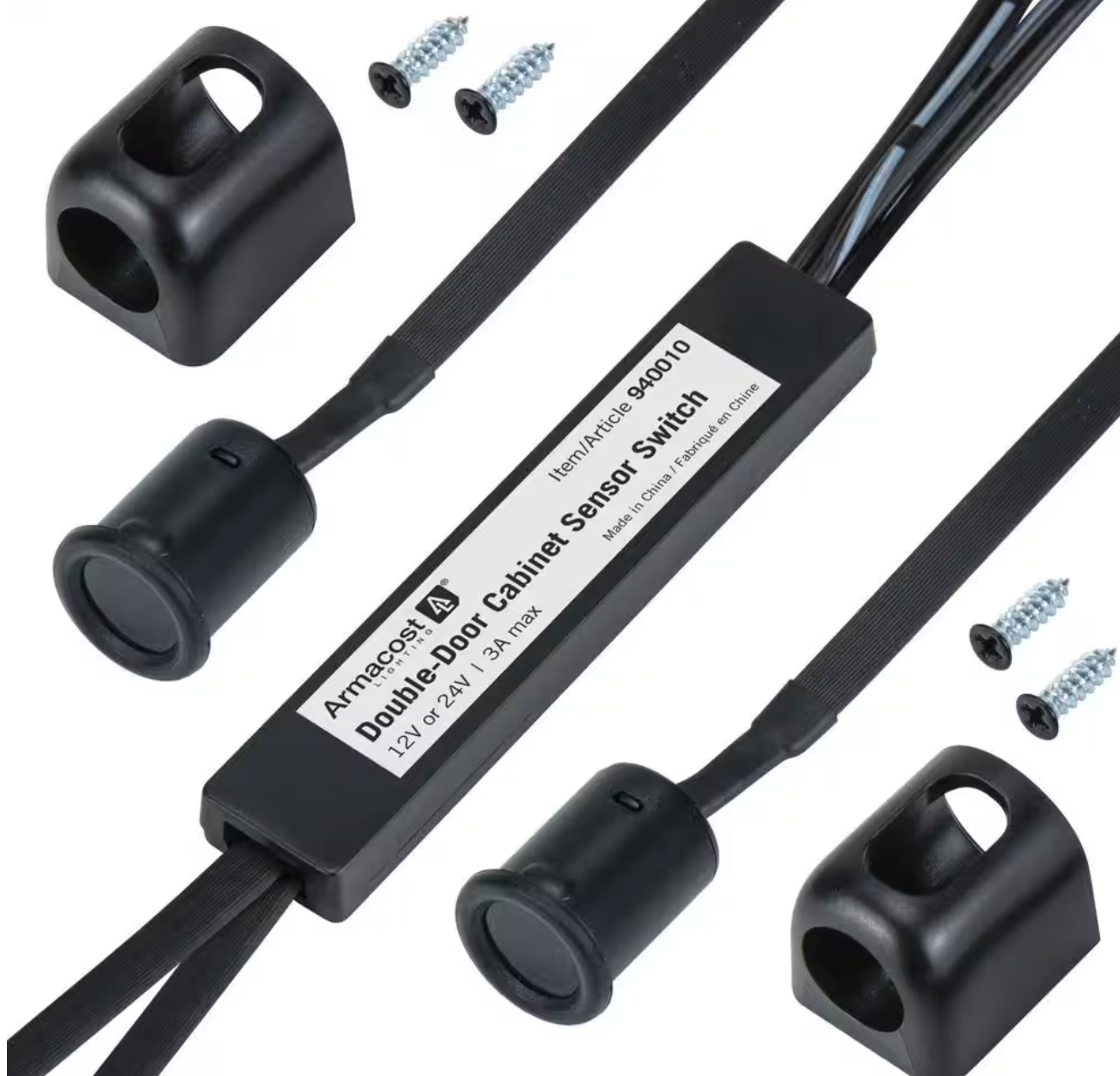
Another control option is a door sensor.
LED lighting automatically turns on when the cabinet door is opened and turns off after it is closed.
This solution is especially convenient for:
- tall pantry cabinets;
- closets;
- wardrobe cabinetry;
- appliance garages;
- display cabinets;
- interior drawers and specialized storage sections.
The user does not need to look for a switch - the lighting becomes part of the way the furniture functions.
Concealed Wiring
One of the main rules of high-quality LED lighting integration is that the wiring should not determine the appearance of the furniture.
Wiring routes should be planned during engineering and shop drawing preparation.
Holes, channels, and technical passages can be machined in advance using CNC equipment.
Wiring can run:
- inside cabinet boxes;
- behind removable backs;
- through dedicated holes;
- inside decorative panels;
- behind fillers;
through technical spaces between the cabinetry and the wall.
The earlier LED lighting is incorporated into the cabinetry design, the cleaner the final result will be.
Color Temperature
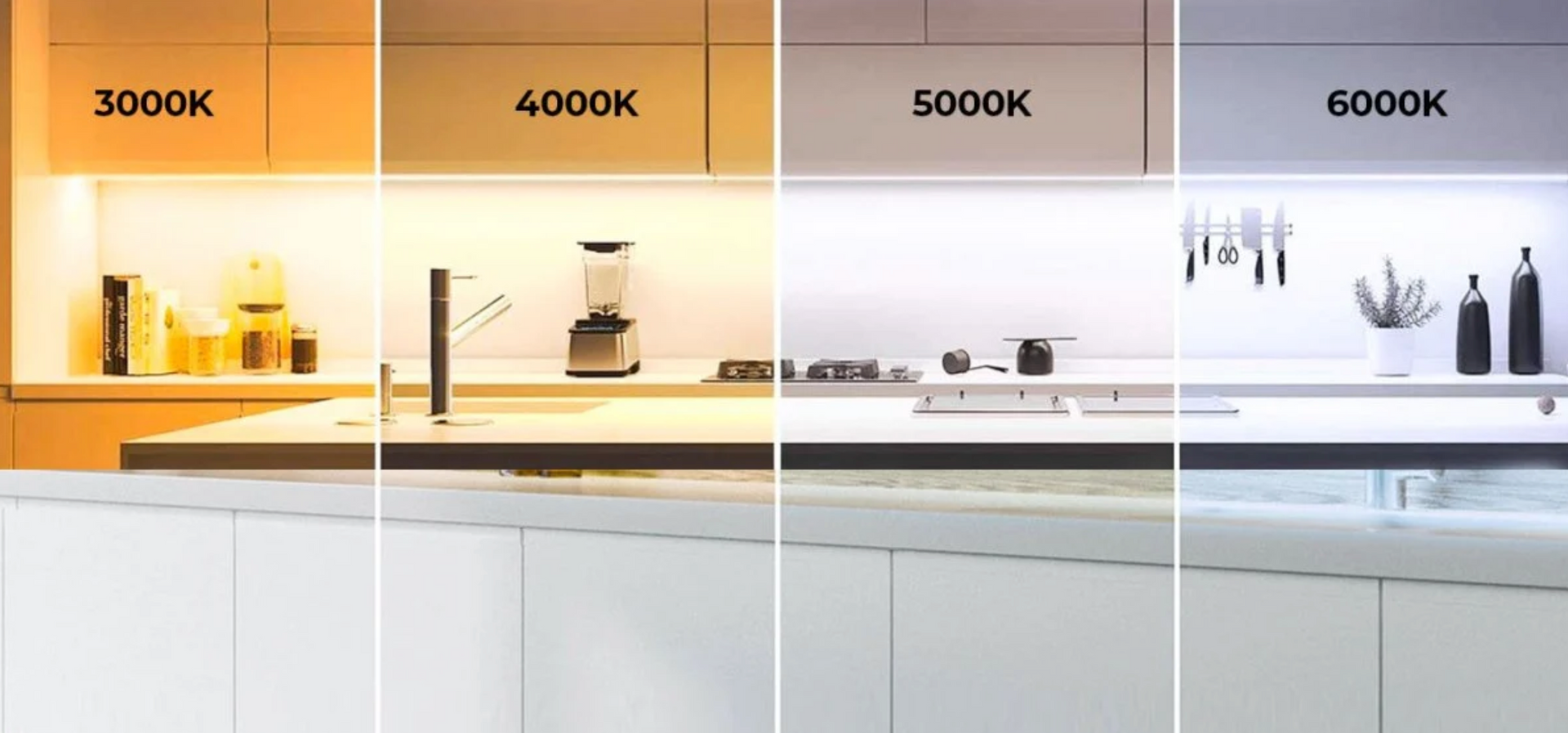
The perception of furniture and finish materials is strongly influenced by color temperature, which is measured in kelvins (K).
Warm light - 2700K - 3000K
Creates a soft, comfortable atmosphere. It especially enhances natural wood, wood veneer, warm HPL/TFL tones, and residential interiors.
Neutral light - 3500K - 4000K
Provides a cleaner and more natural perception of colors. It works well for modern kitchens, under-cabinet lighting, floating shelves, closets, and commercial interiors.
Cool light - 5000K and above
Creates a brighter, more technical effect. It is more commonly used in workspaces and commercial environments.
Tunable White
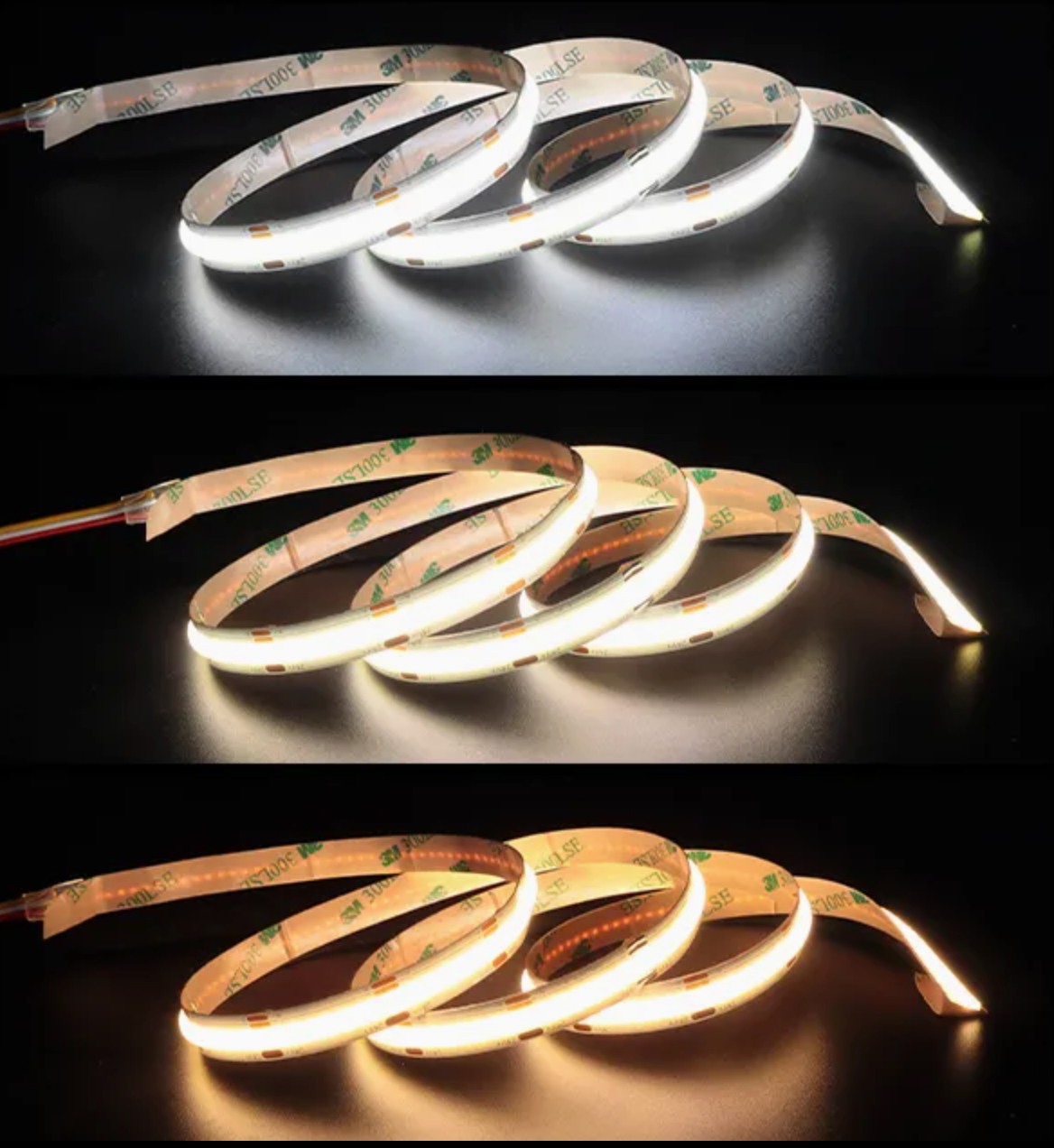
Tunable White allows you to adjust not only brightness but also color temperature — for example, from warm 2700K - 3000K to more neutral or cool 4000K - 6500K.
For this type of system, you need:
- Tunable White LED strip
- compatible power supply / driver
- CCT controller
- dimmer, remote control, or wall-mounted control
- aluminum profile with diffuser
This allows you to use brighter and more neutral light for work and switch to warmer, softer light in the evening. For cabinetry, this solution creates a more expensive and technologically advanced appearance with relatively low additional cost.
Use Only UL / ETL Certified Products

For LED lighting systems used in the U.S., use UL Listed / UL Certified or ETL Listed products whenever possible. These marks indicate that the product has undergone independent testing and has been evaluated for compliance with applicable safety standards.
This applies to LED strips, power supplies/drivers, dimmers, controllers, sensors, and other electrical components.
Before purchasing, look for the certification mark on the product or packaging and ask the supplier for proof that the certification applies to the exact model, not just the manufacturer or a similar product.
Uncertified products, including low-cost imports, may increase the risk of overheating, short circuits, equipment failure, inspection issues, liability, and complications during an insurance claim.
A small upfront saving is rarely worth the potential risk to the project, client, and cabinetry manufacturer.
LED Lighting as Part of the Cabinetry Construction
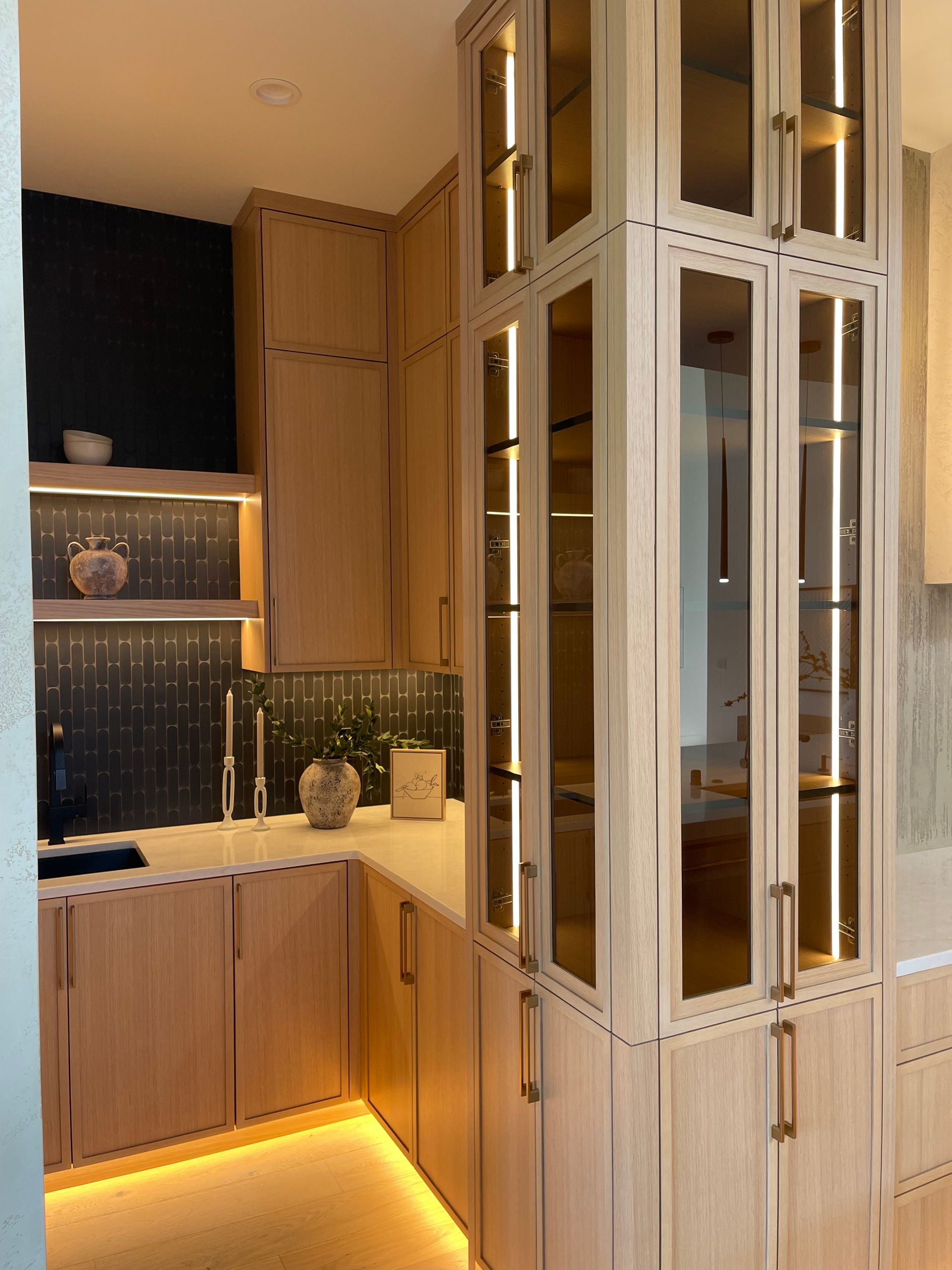
The best result is achieved when lighting is not added after the cabinetry is manufactured but is designed together with the furniture.
During the design and engineering stage, it is possible to determine in advance:
- LED strip location;
- type of COB lighting;
- aluminum profile dimensions;
- CNC groove depth;
- power supply locations;
- wiring routes;
- connection points;
- dimming system;
- motion sensor or door sensor locations.
After that, all necessary grooves, holes, and technical channels are created during the manufacturing process.
This approach makes installation faster and allows for a significantly cleaner final result.
Premium Effect at a Reasonable Cost
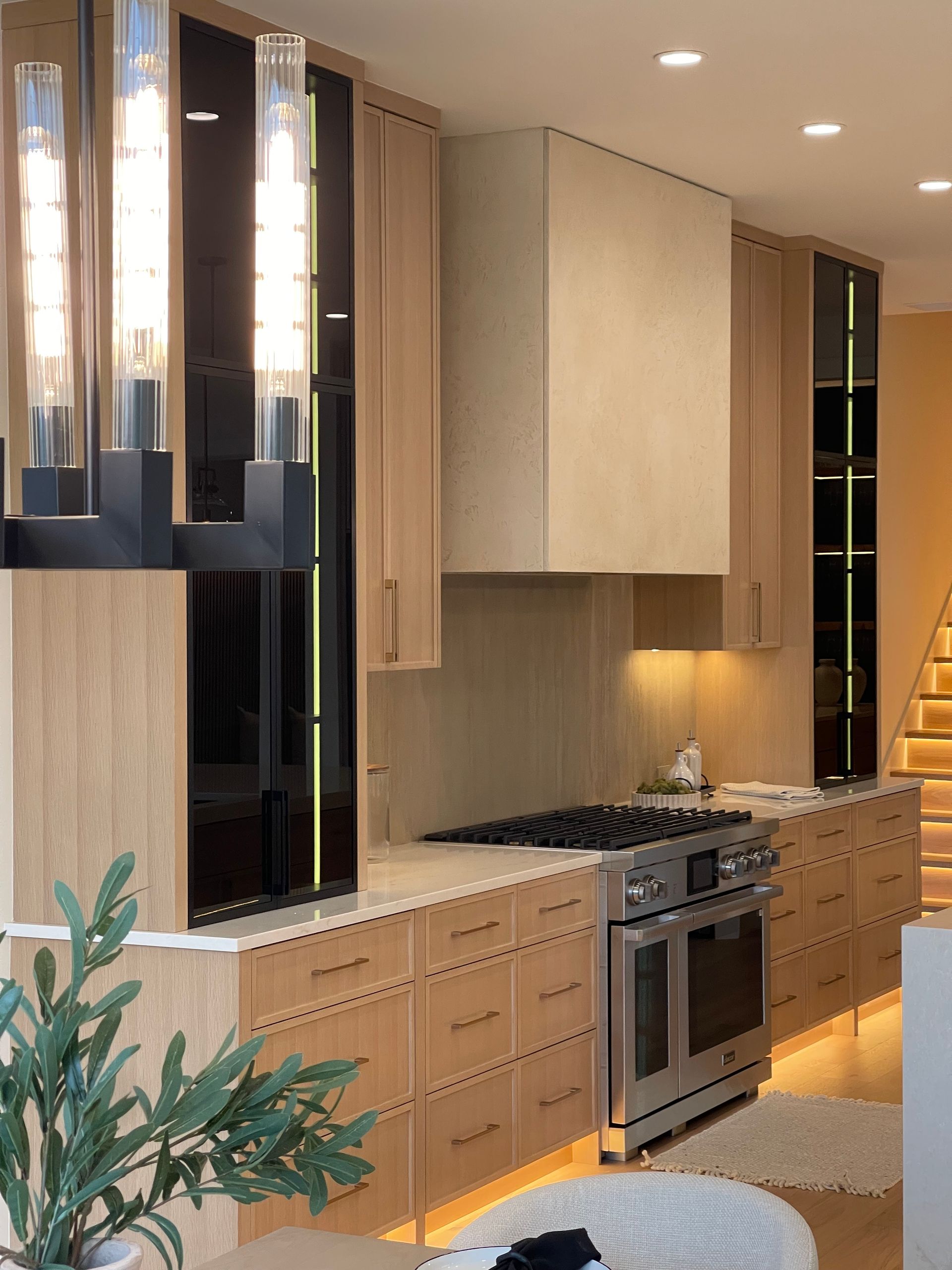
One of the main advantages of integrated LED lighting is the relationship between cost and visual impact.
Creating a premium interior does not necessarily require significantly complicating the construction of every cabinet or using only expensive materials.
Sometimes just a few properly positioned lines of light can completely change the perception of the furniture.
An illuminated floating shelf looks lighter.
Toe-kick lighting creates the effect of a floating kitchen.
Vertical lighting transforms an ordinary open section into a display cabinet.
Under-cabinet lighting highlights the backsplash and countertop.
Soft lighting inside a glass-front cabinet turns it into a visual focal point of the interior.
Relatively small investments in properly designed LED lighting can significantly increase the perceived value of the entire cabinetry system.
That is why integrated lighting is becoming an increasingly important part of modern custom cabinetry.
It is not simply an additional option.
It is a design tool that combines cabinetry, architecture, materials and light into a single system.
Order Cabinetry with Integrated LED Lighting
At Pro-Tech Woodworking in Portland, Oregon, you can order custom cabinetry with fully integrated LED lighting.
We can incorporate the lighting during the cabinetry design stage: select the light placement, prepare CNC grooves for the aluminum profile, conceal the wiring, and provide space for a power supply, dimmer, motion sensor, or Tunable White control.
As a result, you receive not simply furniture with added lighting, but a complete, carefully designed system in which lighting is part of the cabinetry.
This solution is suitable for kitchens, floating shelves, toe-kick, display cabinets, closets, vanities, and other custom cabinetry - and makes it possible to achieve a more modern and premium appearance without significantly increasing the project cost.