EDGEBANDING. PUR vs EVA.
A practical guide for the U.S. cabinetry and millwork market.

Edgebanding is the process of sealing the exposed edge of panels made from MDF, particle board, plywood, solid wood. While it may seem like a minor detail, this step plays a critical role in determining the durability, appearance, and overall quality of the finished product.
In today’s industry - from residential kitchens to commercial millwork - edgebanding is no longer a secondary operation. It is a core part of product engineering and long-term performance.
What is edgebanding and why it matters?

The primary purpose of edgebanding is to seal the porous core of panel materials and protect them from external factors.
Key functions:
- moisture protection
- protection against chips and mechanical damage
- improved appearance
- safety (eliminates sharp edges)
This is especially critical in kitchens and bathrooms, where panels are constantly exposed to humidity, water, and temperature changes.
Types of edgebanding
The choice of edgeband material directly impacts both aesthetics and performance.
Main types:
PVC (Polyvinyl Chloride)
The most widely used option in the market. Offers good durability, cost efficiency, and a wide range of colors and finishes.
ABS (Acrylonitrile Butadiene Styrene)
A more environmentally friendly alternative to PVC. Contains no chlorine, is easier to recycle, and is often used in projects with sustainability requirements.
Veneer Edgebanding
Natural wood. Used in high-end applications where a premium, authentic appearance is required.
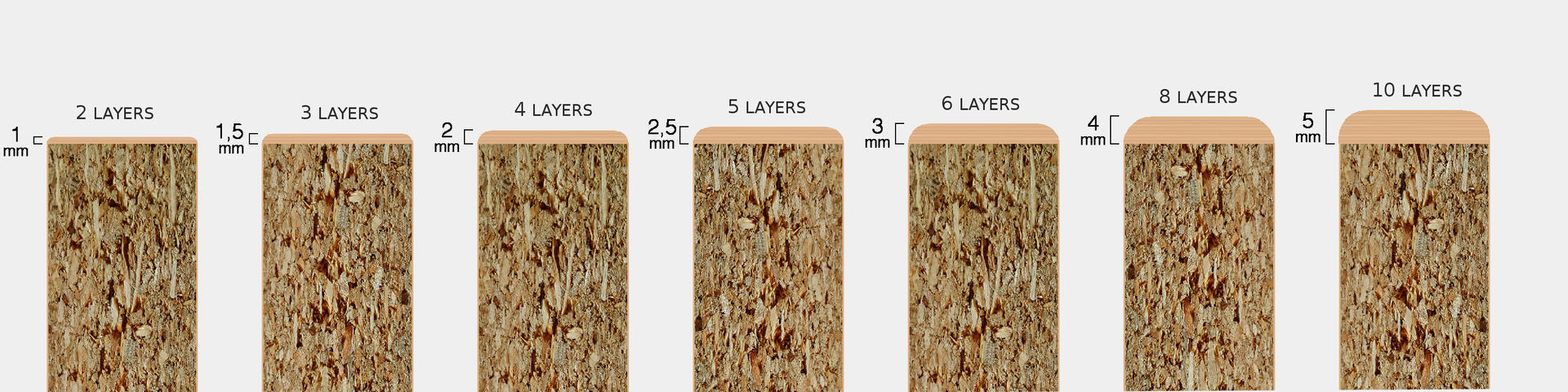
Edgeband thickness and applications.
Thickness
0.5 mm - interior parts, non-visible areas
1 mm - cabinet fronts, standard furniture
2 mm - commercial furniture, high-impact areas
3 mm - heavy-duty protection (rarely used)
Key rule:
The higher the impact and visibility, the thicker the edgeband should be.
Equipment and technology.

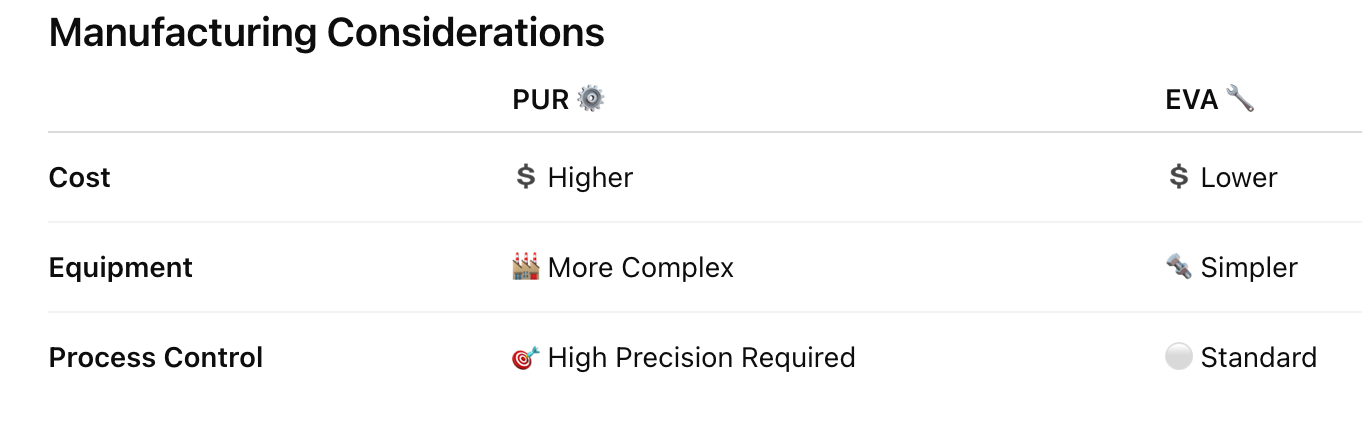
Modern manufacturers use automated edgebanding machines with PUR (polyurethane reactive) adhesive systems.
This is no longer optional - it is the professional standard for:
- kitchens;
- bathrooms;
- commercial millwork.
These systems ensure consistent quality, minimal glue lines, and high production efficiency.
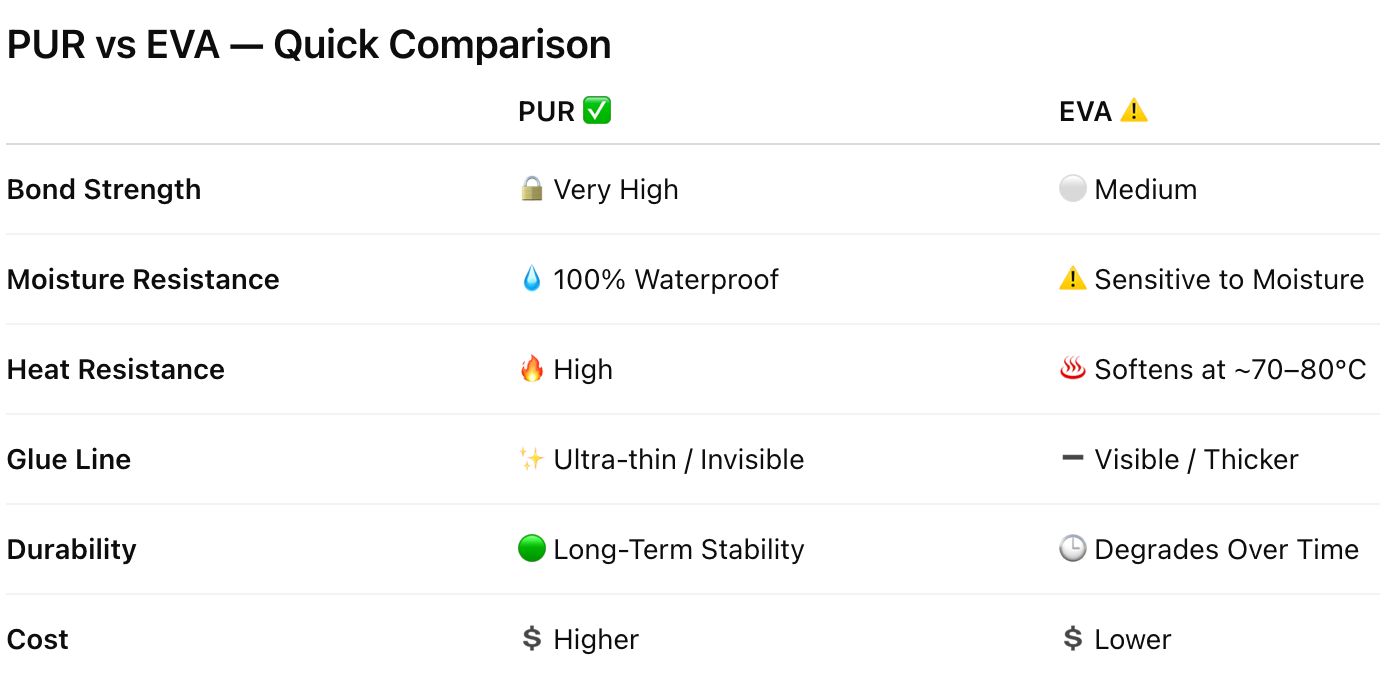
PUR vs EVA - the key difference.

The fundamental difference between adhesive systems lies in how they bond:
- PUR - forms a chemical bond with the substrate;
- EVA - relies on thermoplastic solidification.
Limitations of EVA
EVA remains widely used due to its lower cost, but it has several limitations:
- thermoplastic adhesive;
- sensitive to moisture;
- loses strength over time;
- may delaminate under heat;
- more visible glue line.
Why PUR is the Industry Standard?
Strength
PUR creates a chemical adhesion with MDF, particle board, plywood, and HPL.
In practice, the edgeband cannot be removed without damaging the panel.
Moisture Resistance
Once cured, PUR becomes fully waterproof.
It is resistant to steam, humidity, and water exposure.
Heat Resistance
Withstands high temperatures.
Does not delaminate near cooktops, ovens, or appliances.
Appearance
Minimal glue line.
Visually comparable to laser edgebanding.
Durability
- does not yellow
- maintains bond strength over time
Practical application in projects
PUR is strongly recommended for:
- kitchens;
- bathrooms;
- laundry rooms;
- commercial projects.
In these environments, cabinetry is exposed to moisture, heat, and heavy use—making the difference between PUR and EVA critical.
Key takeaway
The quality of edgebanding is directly determined by the adhesive system used.
PUR = long-term durability + moisture resistance + premium appearance.
In today’s U.S. market, where clients expect consistency and long service life, PUR is no longer a premium upgrade-it is the standard of professional manufacturing.